


I’m a registered dietitian, and both my kids were formula fed. As a dietitian, I’d studied the benefits of breastfeeding, and when I had my first baby, I just assumed that’s what I’d do. I stocked up on the essentials — a breast pump, nursing bras, ice packs, nipple cream, even a trendy cover-up I’d seen all over social media. But after three painful months with a lactation consultant, it was clear that exclusive breastfeeding wasn’t in the cards. While emotional at first, the relief I felt watching my baby happily take a bottle quickly outweighed any guilt or shame. By six months, my son was fully formula fed, and with my next baby, I felt confident switching when breastfeeding and exclusive pumping again didn’t pan out. My journey isn’t unique. According to a 2022 report from the Centers for Disease Control and Prevention, by 6 months of age, only 1 in 4 babies are exclusively breastfed, and more than half are combo fed with both breast milk and formula.
Quick Overview
“Infant feeding is not just about nutrition: It’s also about supporting the whole family’s well-being. Human milk is the gold standard for infant nutrition. However, for some families, using baby formula can mean the difference between an exhausted, anxious parent and one who is rested, present and emotionally connected to their baby, which ultimately benefits everyone,” says infant feeding expert Malina Malkani, MS, RDN, CDN. There are countless reasons families turn to formula, note Brittany Brown and Jessica Enderle, both pediatric dietitians and infant feeding specialists. From medical needs to workplaces that don’t support regular pumping, parents often face circumstances that make formula not just a convenience, but a necessity.
“Bottom line, there is no single ‘right’ way to feed every baby, only the best approach for your baby and your family,” emphasizes Malkani.
Advertisement
Advertisement
Whether you’re looking to combo feed or exclusively use formula, selecting the best formula can be daunting. The good news: There are more options than ever before. To help you navigate your choices, I consulted three baby feeding experts and pulled from my own experience as a mom and dietitian. Keep reading for tips on choosing, using and making your formula journey less stressful.
Table of contents
Step-by-step guide for choosing the right formula for your baby
Step 1: Determine the type of formula your baby needs
The biggest difference when it comes to baby formula? Protein. “All infant formulas sold in the United States meet strict FDA safety and nutrition standards, but the type of protein they each contain can make a big difference for babies with sensitivities or allergies,” says Malkani. While the protein source — cow vs. goat’s milk, for example — is important (we’ll get to that next), the first step is actually figuring out whether your baby can tolerate proteins that are intact, or if their digestive system needs a little help in the form of a hydrolyzed or partially hydrolyzed formula.
-
Standard: “Standard formulas generally use intact cow milk [or goat milk] proteins and are suitable for most healthy infants,” says Malkani. Per Enderle, standard cow’s or goat’s milk formulas are often a good starting point for healthy, full-term babies.
-
Partially hydrolyzed: If your baby is extra fussy or gassy on a standard formula, your pediatrician may recommend trying a partially hydrolyzed formula. “Partially hydrolyzed formulas have proteins that are partially broken down, making them easier to digest for some babies with mild digestive discomfort,” explains Malkani. However, she adds that this type of formula isn’t “suitable for babies with a diagnosed milk protein allergy.”
-
Hydrolyzed: “Extensively hydrolyzed formulas contain proteins that are broken into much smaller fragments and are designed for and tolerated by about 90% of infants with more significant cow milk protein allergies,” says Malkani.
-
Elemental: According to Malkani, elemental formulas are typically reserved for babies with severe food allergies, though they may also be recommended for babies with malabsorption syndromes. Elemental formulas feature proteins in their simplest form — individual amino acids — making them easier to digest and absorb.
Keep in mind that you don’t — and shouldn’t — navigate the decision of formula type on your own. “The best way to figure out which formula is right for your baby is to talk to your child’s health care provider, who can recommend the safest, most effective and most readily available option,” says Malkani.
Step 2: Weigh the pros and cons of different protein sources
Next up: protein source. The three main protein sources for baby formula are cow’s, goat’s and soy milk. According to Enderele, “cow- and goat-based formulas will be most comparable to breast milk due to the types of proteins (whey and casein) and carbohydrates (lactose) similarities.” However, soy-based formulas may be preferred by families who follow a vegan lifestyle.
Advertisement
Advertisement
Here are the key differences:
-
Cow’s-milk-based: “Cow’s milk formulas are the most common and affordable, with a carb, protein and fat balance similar to breast milk, although the protein makeup may be linked to constipation in some babies,” says Brown.
-
Goat’s-milk-based: “Goat milk formulas may be gentler on digestion thanks to their protein makeup, but they’re harder to find and usually more expensive,” Brown says. While many babies do well on a cow’s-milk-based formula, Malkani notes that “for babies who are generally healthy, but fussy and struggling with mild digestive issues like constipation, gas or colic, many parents find goat-milk‑based infant formula to be a game changer. Goat milk infant formula often digests more easily because it forms smaller, softer curds in the stomach and has a protein profile that’s naturally closer to breast milk, making it a great choice for combo feeding.”
-
Soy-milk-based: “Soy-based formulas can be a great fit for vegan families, though they come with important considerations like higher aluminum content,” says Brown. According to an older study in the World Journal of Pediatrics, higher aluminum exposure may negatively affect bone development, especially in preterm babies and those with impaired kidney function or who weighed less than 4 pounds at birth.
While there are advantages and potential drawbacks to each formula type, it’s important to reiterate that all baby formula sold in the United States is regulated by the Food and Drug Administration and must provide the types and amounts of nutrients needed to meet a baby’s growth and developmental needs.
Step 3: Look for lactose as the main carbohydrate
Carbohydrates are the main energy source for your little one’s developing body, so paying attention to the type of carbohydrate in your baby’s formula is clearly pretty important. “Lactose is the main carbohydrate in breast milk and the preferred energy source in most infant formulas because it is generally well tolerated and supports a healthy gut microbiome,” says Malkani. Enderle agrees, saying that “if a baby can tolerate a standard formula, it is best for parents to use a formula with lactose as the primary carbohydrate.”
Other sources of sugar you might come across are corn syrup solids and sucrose. While they may be necessary for babies with true lactose intolerance, Brown recommends skipping these ingredients if your baby can tolerate lactose, pointing to a 2020 study in Gut Microbes that suggests these ingredients may negatively affect gut health and increase the risk of childhood obesity. Ultimately, whether or not to opt for a lactose-free formula is a decision you should make with your child’s pediatrician or dietitian.
Step 4: Decide which ‘extras’ you feel are important
Even as a nutrition expert, I found myself overwhelmed by the confusing jargon on formula labels. I spent hours Googling, digging through PubMed and messaging my pediatric dietitian friends just to figure out which added ingredients were actually worth prioritizing in my sons’ formulas.
Advertisement
Advertisement
Here’s a quick rundown of five commonly added nutrients you’ll see on formula labels:
-
DHA: DHA (docosahexaenoic acid) is an omega-3 fatty acid that’s essential for infant brain and eye development. While the FDA doesn’t require DHA in infant formula, many brands are starting to include it. Brown says, “DHA is absolutely worth the hype,” and Enderle agrees, adding that research continues to show benefits for infants. In fact, as of February 2020, the European Union made DHA a required nutrient in infant formula to support healthy growth and development.
-
HMOs: HMOs, aka human milk oligosaccharides, are complex sugars found in breast milk. They’re unable to be digested by babies and are thought to play a key role in gut health. They may support immune and brain development as well. While they fall into the “nice to have” category, Brown notes that more research is needed on whether added HMOs in formula are as effective or beneficial as those found naturally in breast milk.
-
MFGM: This fun acronym stands for milk fat globule membrane. MFGM surrounds fat droplets in breast milk and is thought to be important for brain, gut and immune development. Enderle puts MFGM in the same camp as HMOs: Early research is promising, but more studies are needed before considering it a must.
-
Lactoferrin: This is a type of protein found in breast milk that aids in iron absorption and supports healthy immune function. According to a 2024 review, lactoferrin has been shown to be important for brain, gut and immune health in infants. However, more research is needed on optimal dosing in baby formula.
-
Probiotics: Probiotics are beneficial gut bacteria that are linked with multiple benefits for infant health and are naturally found in breast milk. According to the American Academy of Pediatrics (AAP), probiotics in formula can be helpful for supporting your baby’s gut health and protecting against potentially harmful pathogens. However, the AAP also acknowledges that research on the benefits of probiotics in the pediatric population is ongoing.
TL;DR: While more research is needed, DHA, HMOs, MFGM, lactoferrin and probiotics all have potential health benefits for formula-fed infants and are worth looking for if you can afford to do so. That said, if you can prioritize only one, opt for a formula with DHA. It’s essential for brain and eye development, and most formulas now include it, though amounts can vary.
Step 5: Factor in price and availability
There’s no getting around it: Formula isn’t cheap. When I was exclusively formula feeding my youngest, I budgeted $250 per month for his formula. And that’s just the powder. About every two months, I’d also replace the nipples on his bottles, either because of wear and tear or because he was ready for a faster flow.
Luckily, there are some ways to cut down on the monthly cost. “My personal best-kept formula secret: Store-brand options are pretty amazing in the United States. They offer quality and variety for an affordable cost,” says Enderle. For those who qualify, government assistance programs, like WIC and SNAP, and formula manufacturer programs, like those through Enfamil and Similac, can also help make infant formula more affordable for low-income families.
Advertisement
Advertisement
In addition to determining how much room is in your budget, it’s important to consider where you can actually buy your baby’s formula. With my first, I opted for a formula that was only available online — and it was stressful. My shipment was delayed multiple times, resulting in me doing a mad dash to Target and buying a different formula to bridge the gap, which didn’t always go smoothly, as switching formula cold turkey doesn’t always jibe with a developing baby’s tummy. My advice? Choose a formula that’s available both in stores and online. Target became my go-to destination for formula, but Costco, Sam’s Club and Walmart all carry an impressive selection of formulas.
Powdered vs. liquid formula
Just when you think you have it all figured out, I have one more variable to throw at you: powdered vs. liquid formula. Here’s a quick breakdown of the pros and cons, according to Malkani.
-
Powdered formula: “Powdered infant formula is the most economical and eco-friendly option, as it uses less packaging, stores well when unopened and has a longer shelf life than liquid formula. However, it’s not sterile [and] requires careful mixing.”
-
Ready-to-feed: “Ready-to-feed formula is more convenient in that it requires no measuring or mixing and is sterile until opened. The trade-offs are cost, short shelf life after opening and the need to refrigerate leftovers.”
-
Liquid concentrate: This formula is similar to powdered in that you need to measure out a specific ratio of concentrate to water. However, the ratio is almost always 1-1, making it relatively straightforward. As with ready-to-feed formulas, liquid concentrates are often more expensive and need to be used within 48 hours after opening.
It’s also worth noting that there are far fewer liquid concentrate and ready-to-feed options compared with powdered. However, Malkani says that some families she’s worked with use a combination — powdered for the majority of the time and ready-to-feed for travel or middle-of-the-night feeds.
Best baby formulas
While by no means exhaustive, here are some of the best infant formulas to talk with your child’s pediatrician about. These formulas were chosen based on their ingredient quality, helpful additives like DHA and HMOs, price, availability, and parent feedback on ease of mixing and tolerability. We also reviewed Consumer Reports’ 2025 report on contaminants in baby formula to ensure our picks had low or undetectable amounts of BPA and heavy metals like lead, cadmium and mercury.

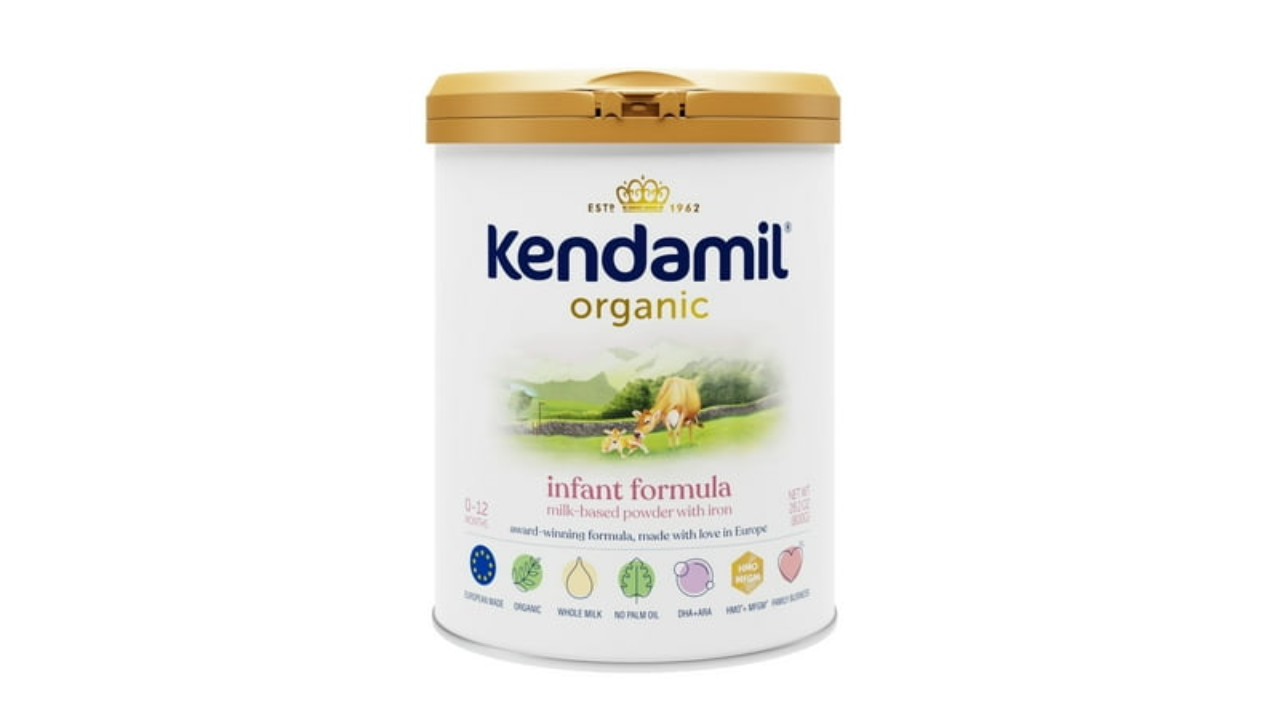
Kendamil
Personally, after trying several formulas with my youngest — who struggled with reflux — Kendamil Goat made a noticeable difference. It was creamy, easy to prepare and, most importantly, my son could finally feed comfortably.
Similar formulas to consider: Bobbie Organic Whole Milk Infant Formula, Bubs Goat Milk Infant Formula
- Organic
- Nonorganic and goat milk formulations available
- Available at Target and Walmart
- Meets rigorous EU standards, including no palm oil, corn syrup or gluten
- Contains DHA, MFGM, HMOs and prebiotics
- Milk sourced from grass-fed cows
- Not available on Amazon
- Relatively expensive
Costco
- Affordable
- Free of corn syrup, sucrose and palm oil
- Contains lactose as the sole carbohydrate
- Includes DHA and HMOs
- Contains soy
- Can be hard to find in stores
- Doesn’t contain some extras, like MFGM and probiotics
- Complaints of damaged containers

Enfamil
Similar formulas to consider: Similac 360 Total Care Sensitive Infant Formula, Bobbie Organic Gentle (out of stock until fall 2025)
- Formulated to be easier to digest
- Contains DHA
- Widely available online and in stores
- Contains corn syrup solids and palm oil
- Doesn’t include some extras, like HMOs, MFGM or probiotics
Signs that your baby isn’t tolerating their formula
You did it! You spoke with your pediatrician (or pediatric RD), did your research and landed on a product that seemed to check all the boxes for your baby. But what happens if your baby doesn’t tolerate the formula? And how can you tell?
Advertisement
Advertisement
“While many babies have occasional spit-up, gas or fussiness, consistent and/or severe symptoms may indicate that a baby isn’t tolerating their formula well,” says Malkani. She adds that certain symptoms are particularly concerning and should be addressed with a medical professional right away. These include:
-
Persistent vomiting
-
Persistent diarrhea
-
Blood in stool
-
Poor weight gain
The next course of action depends on the severity of your baby’s symptoms and the advice of your child’s pediatrician. In some cases, you may need to stop the current formula immediately and start a new one that better fits your baby’s needs. However, if the symptoms aren’t severe and a food allergy or intolerance isn’t suspected, then you may be recommended to gradually transition your little one to a new formula.
How to switch formulas
While you, as an adult, may be able to go from oat to almond milk without an issue, your infant’s digestive system isn’t as advanced, and changing formulas too quickly has the potential to cause discomfort. Assuming it’s medically safe to do so, Malkani recommends making the transition gradually “to give your baby’s palate and digestive system time to adjust. I like to recommend mixing small amounts of the new formula in with your baby’s current formula, then slowly increasing the amount of new formula as tolerated to help ease the transition.”
Advertisement
Advertisement
Any time you start or change baby formula, Malkani recommends watching “for signs of intolerance, like changes in stool, gas or fussiness.” She also recommends keeping your child’s pediatrician in the loop to ensure the change is safe and developmentally appropriate.
How to safely prep and store formula
Speaking of safety, it’s essential to follow the AAP’s guidelines when preparing and storing baby formula to protect your baby against potential pathogens and nutrient toxicity.
To keep your little one safe, here are key steps for safely preparing powdered infant formula:
-
Wash your hands with soap and water before preparing a bottle.
-
Make sure the bottle has been properly cleaned and sterilized.
-
Pour the appropriate amount of water into the bottle.
-
Measure out the corresponding amount of powder using the scoop provided with the formula, level it off and add it to the bottle.
-
Mix thoroughly, and test the temperature to make sure the formula isn’t too hot for your baby. Tip: Shake a few drops of formula onto the inside of your wrist. It should feel warm, not hot.
Enderle stresses the importance of following measurement guidelines on the formula’s label. Some powdered formulas have a simple ratio of 1 scoop of formula per 1 ounce of water, whereas others may have a 1-2 or 2-1 ratio. Getting the ratio incorrect can have serious consequences. Not only can it result in your baby getting too much or not enough nutrition, but it could disrupt their electrolyte balance, which, in severe cases, can lead to seizures. This is also why the AAP doesn’t recommend diluting baby formula.
Important storage tips
-
Prepared bottles can be left at room temperature for up to two hours.
-
Once your baby’s lips touch the bottle, the formula should be consumed within one hour, with any leftover milk being discarded, says Enderle.
-
Powdered formula can be prepared in a large batch for the day and stored in the fridge for up to 24 hours. This is sometimes referred to as the “pitcher method.”
-
Once opened, a can of powdered formula should be carefully sealed and used within 30 days.
-
Ready-to-feed formula is often shelf-stable prior to use. Once opened, it should be refrigerated and used within 48 hours.
Advertisement
Advertisement
Safety concerns
To keep your baby healthy and ensure they’re getting the nutrients they need to thrive, it’s critical to choose a baby formula that’s approved by the FDA. While you can debate whether certain formulas are healthier than others, Malkani says, “It’s important to remember that all FDA-reviewed infant formulas on the U.S. market meet strict standards for safety and contain the essential nutrients (like iron and vitamin D) that babies need to grow and thrive.”
That said, certain baby formulas have been subject to recalls over the years. For this reason, it’s worth keeping an ear out for instances where products may be found to be unsafe for infants.
Another common concern parents have about baby formula is the risk for contaminants, like heavy metals. In March 2025, Consumer Reports published results after testing 41 popular infant formula brands for heavy metals and toxic chemicals. The report found that about 50% of samples showed low or no levels of concerning chemicals, which is good, but the other 50% contained potentially harmful levels of at least one contaminant. A day after the report, the FDA announced Operation Stork Speed — an initiative to improve quality and safety control measures in the formula industry.
Advertisement
Advertisement
Helpful tools for formula feeding

Philips

Dr. Brown’s

Baby Brezza
That said, Brown notes that formula machines may not be suitable for babies who require boiled water, since not all models heat water hot enough to kill harmful bacteria. If that’s a concern for your baby, check the safety specs or consider other prep methods.

Termichy
FAQs
Which formula is most like breast milk?
According to Enderle, “cow- and goat-based formulas will be most comparable to breast milk due to the types of proteins (whey and casein) and carbohydrates (lactose) similarities.” However, Brown notes, “all formulas are manufactured to be similar to breast milk in some way. A woman’s breast milk is curated specifically for that baby, and we know some breast milk is higher in fat or protein depending upon the point in time a baby is born. It is hard to pinpoint one formula as being most like breast milk since it is always changing to meet the needs of a growing baby.”
Are European-style formulas better?
Not necessarily. According to Brown, “European formulas follow a more rigid set of standards than their North American counterparts and [may] more closely replicate breast milk in the process.” For example, the EU “requires DHA (a type of omega-3) to be added to the formula, sets limits on the amount of iron and has banned the use of corn syrup,” she says. However, as Enderle points out, several U.S. brands offer the same nutritional profile as European brands and voluntarily follow similar quality and safety standards.
What is the best water for baby formula?
According to Brown, as long as it’s safe to drink, tap water is perfectly fine to use. However, to kill off microbes, the AAP recommends using boiled water for babies under 2 months of age, those who were born prematurely and those with a weakened immune system. After boiling, the AAP says to let the water cool for five minutes before adding it to a clean bottle.
Advertisement
Advertisement
Meet our experts
-
Malina Malkani, MS, RDN, CDN, infant feeding expert, Kabrita medical adviser and author of Safe and Simple Food Allergy Prevention
-
Jessica Enderle, RD, LC, owner of Baby Food and Fun
-
Brittany Brown, RD, IBCLC, CDE, pediatric dietitian and lactation consultant
Our health content is for informational purposes only and is not intended as professional medical advice. Consult a medical professional on questions about your health.


